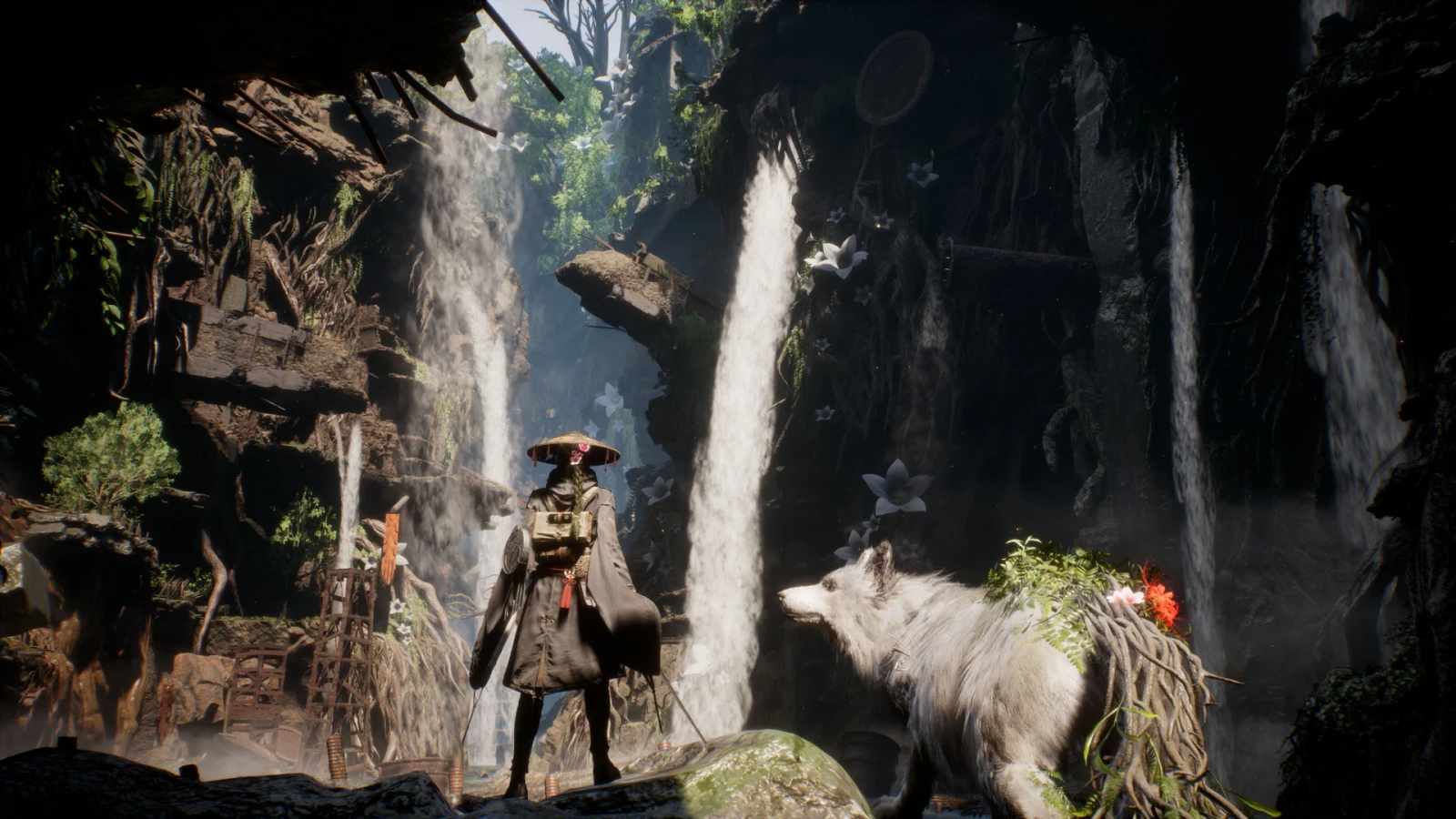
Beast of Reincarnation gameplay combines real-time sword combat for Emma with command-based abilities performed by Koo. You explore a post-apocalyptic Japan, fight ordinary blighted enemies and powerful Nushi, improve skills and equipment, and use both characters as one connected combat system. It is a single-player action RPG rather than a turn-based game or party-based adventure.
The core combat loop
Emma handles immediate action: movement, sword strikes, parries, dodges, ranged options, and Blade Arts. Koo contributes Bloom Arts selected from a command menu that slows time while you choose. Emma's successful actions build the Florescence Points used for Koo's techniques.
This creates a repeating loop of earning resources through direct play and spending them on tactical intervention. A Bloom Art can interrupt pressure, extend an opening, or help control a difficult encounter. The system works best when Koo is treated as part of the main moveset rather than an automated sidekick.
Swordplay, parries, and defense
Emma's combat is built around reading enemy attacks and choosing the right response. Parries can turn defense into an opening, while dodges and repositioning remain important when timing is uncertain or several enemies attack together. Review coverage indicates that the game supports aggressive play without making every encounter a mandatory parry test.
Blade Arts expand Emma's offensive options beyond ordinary strings. Exact balance values can change through patches, so a reliable guide should describe what a skill does before claiming a permanent best choice. The most useful early approach is one repeatable attack pattern, one trusted defense, and a Koo ability that solves a clear problem.
Koo and Bloom Arts
Koo is a large blighted dog and the second half of the combat design. His Bloom Arts are tactical commands rather than a separate freely controlled character mode. Opening the command interface slows the action so you can choose without abandoning the real-time structure.
Florescence Points prevent those commands from being unlimited. Building and spending the resource creates the game's central rhythm, and timing often matters more than using an ability as soon as it becomes available. Official material emphasizes the partnership between one person and one dog as the defining feature.
Builds, gear, and Spirit Stones
Progression includes skill trees, weapons or equipment, and Spirit Stones that can reinforce a chosen style. The game also provides ranged attacks and stealth options, so the toolset is broader than sword strikes alone. A coherent loadout is more useful than collecting effects that depend on situations you rarely create.
The system offers customization, but some reviews describe its depth as limited compared with larger RPGs. Players should expect build decisions that shape combat rather than a fully open class system or character creator. Exact respec rules and optimal combinations may change with patches and should be checked in version-specific guides.
Exploration and traversal
The journey is set in Japan in the year 4026 after civilization has been transformed by the Blight. Areas support exploration around camps, landmarks, optional paths, and resources, but reviews generally describe the structure as open yet directed rather than one uninterrupted open world. Koo's senses can draw attention to useful points in the environment.
Emma's vine-like hair is also used for traversal. When a route appears blocked, elevated grips or alternate paths may provide the way forward. The Blue Key objective in the opening village is an early example of using the climbing system to reach a mountain campsite.
Enemies and Nushi battles
Nushi are powerful regional rulers and act as major combat milestones. Preparing a stable build, restoring supplies, and learning attack tells matters more than forcing the same combo through every phase. The first attempt can be used to identify safe openings and the moments when Koo creates breathing room.
Enemy and boss variety is also one of the most common review criticisms. Some encounters make excellent use of the hybrid system, while critics report that repetition becomes more noticeable over the full campaign. That limitation is important context for anyone expecting constant mechanical reinvention.
Difficulty and pacing
The combat asks for timing and observation, but it provides more than one defensive answer. Players can combine parries, dodges, ranged tools, stealth, equipment effects, and Koo's commands instead of relying on a single technique. This flexibility can make difficult sections easier to diagnose.
The command slowdown gives time to think without changing the entire game into turns. It also distinguishes the experience from faster action games where companion moves are mapped only to shortcuts. The official sources used here do not document every difficulty option or patch-specific value, so this page does not invent menu details.
What gameplay is not
This is not a multiplayer or cooperative game; the official stores list single-player play. Koo is not controlled by a second player. It is also not a traditional turn-based RPG, despite the command layer.
The game is best understood as a focused action RPG with a tactical pause-like companion system. Exploration, story, and progression support that central combat idea. If that Emma-and-Koo loop sounds appealing, it is the clearest reason to play.